Understanding your cat first
Dr Irene Welford-Christie takes a calm, compassionate and science led approach to resolving behavioural problems in cats, one that focuses on understanding why your cat is behaving the way they are, rather than simply trying to stop the behaviour itself. By combining veterinary expertise with a deep understanding of feline behaviour, she provides tailored support that improves your cat's overall quality of life, helping them feel safe, balanced and able to thrive.
At the heart of Irene's approach is the understanding that problem behaviours are often a reflection of your cat's emotional state. Behaviours such as aggression, urine spraying, over-grooming, furniture scratching or inappropriate toileting are often signs that a cat is feeling stressed, frightened, frustrated, or unwell.
By identifying the physical, environmental, emotional and learned factors that may be contributing to the behaviour, including any changes in cognitive health, Irene can address the cause rather than just managing the symptoms.
Working within professional standards
Physical health
Issues such as joint pain, high blood pressure or Hyperthyroidism can all contribute to behavioural challenges in cats. If a cat is in pain or unwell they can become more protective of themselves, this can contribute to increased levels of behaviours such as aggression or avoidance. Irene will work with your referring veterinary surgeon to make sure physical health factors are examined and addressed. Older cats will also be assessed for signs of cognitive decline, as age-related changes in the brain can affect behaviour and may benefit from medical support.
Environmental
Irene works according to the recommendations from the International Society of Feline Medicine (ISFM) and the Feline Veterinary Medical Association (Feline VMA) to help you create an optimal environment for your household cats. We will examine the provision of key resources such as litter trays and feeding stations to optimise the number and position in the home. This means that your cats can thrive in their home environment, by feeling safe and secure.
Emotional system
Irene's work is based on understanding the emotional systems that drive feline behaviour. These include positive systems, such as play, exploration and curiosity, as well as protective systems like fear, frustration and anxiety. When a cat's emotional balance shifts, particularly if negative emotions outweigh positive ones, behavioural problems can develop. Irene carefully assesses which emotional systems are active for your cat and how their environment and physical health may be contributing to this imbalance. This allows them to reach a calm, emotionally stable state during the RESET phase.
Learning and cognitive health
Cats are influenced by both previous learning and the experiences they have not had. A frightening or unpleasant event can shape how a cat responds in similar situations, while limited positive exposure may leave them uncertain or fearful. Irene will consider your cat's learning history, early experiences and current behaviour to understand how these responses have developed. Where anxiety or other behavioural difficulties may be linked to changes in brain function, medication may also be considered in collaboration with your cat's veterinary surgeon.
"Rather than using punishment or quick fixes, Irene focuses on gentle, lasting change. By improving your cat's emotional wellbeing and giving them more choice and control in their environment, behaviour naturally begins to improve."
Getting started
This approach not only resolves current issues but also helps prevent future problems, supporting a calmer, more confident cat and a stronger bond between you and your companion.
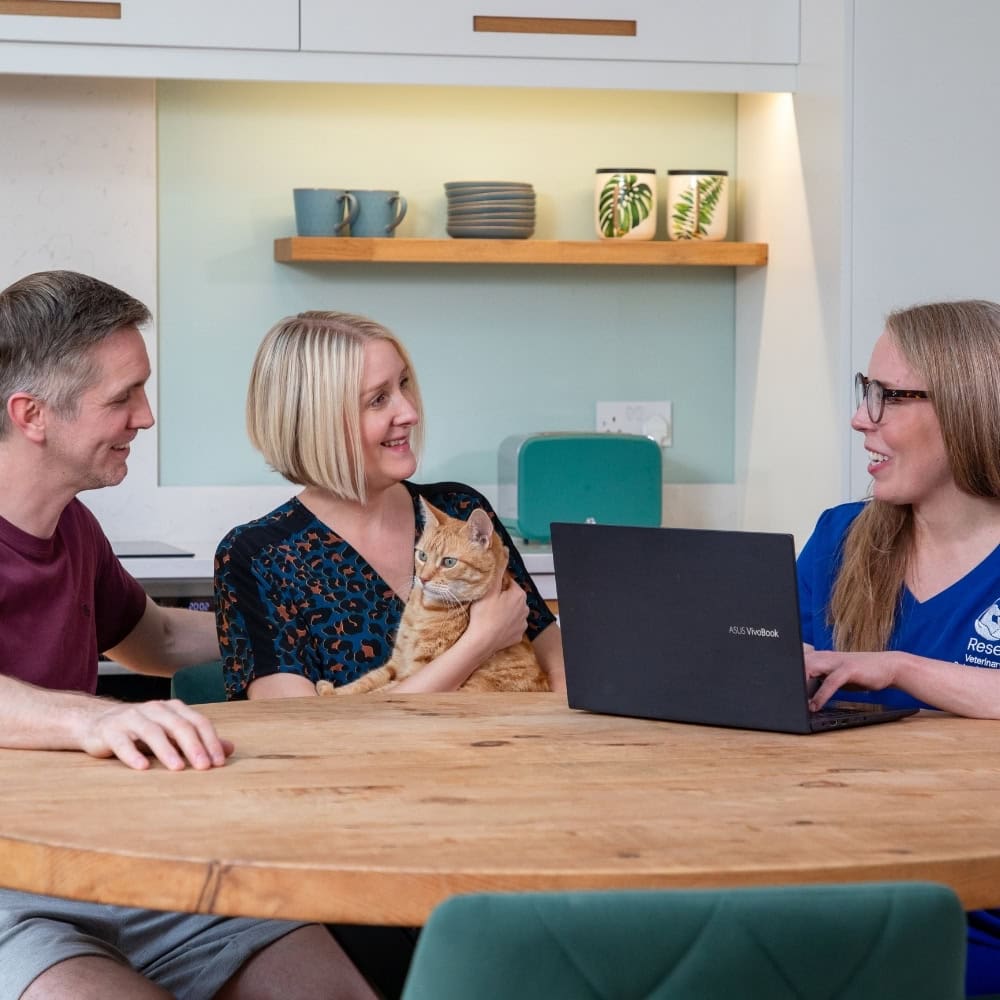
You will be asked to complete a detailed questionnaire and provide video footage of your cat in their usual environment. You will also be asked to provide a simple layout of your home, highlighting key resources such as feeding and water sources, resting spots, litter trays, scratching areas and other important locations. A video tour of your home will also be requested to allow Irene to visualise the position of these key resources.
A three phase approach to behaviour change
The behaviour programme is divided into RESET, REWIRE and REBUILD. Each phase has a different purpose. Some straightforward behavioural challenges improve sufficiently during RESET alone. More complex, long-standing or higher-risk problems usually benefit from continuing into REWIRE and REBUILD so that new responses can be learned and then used confidently in everyday life.
Reset - creating safety, calm and emotional stability
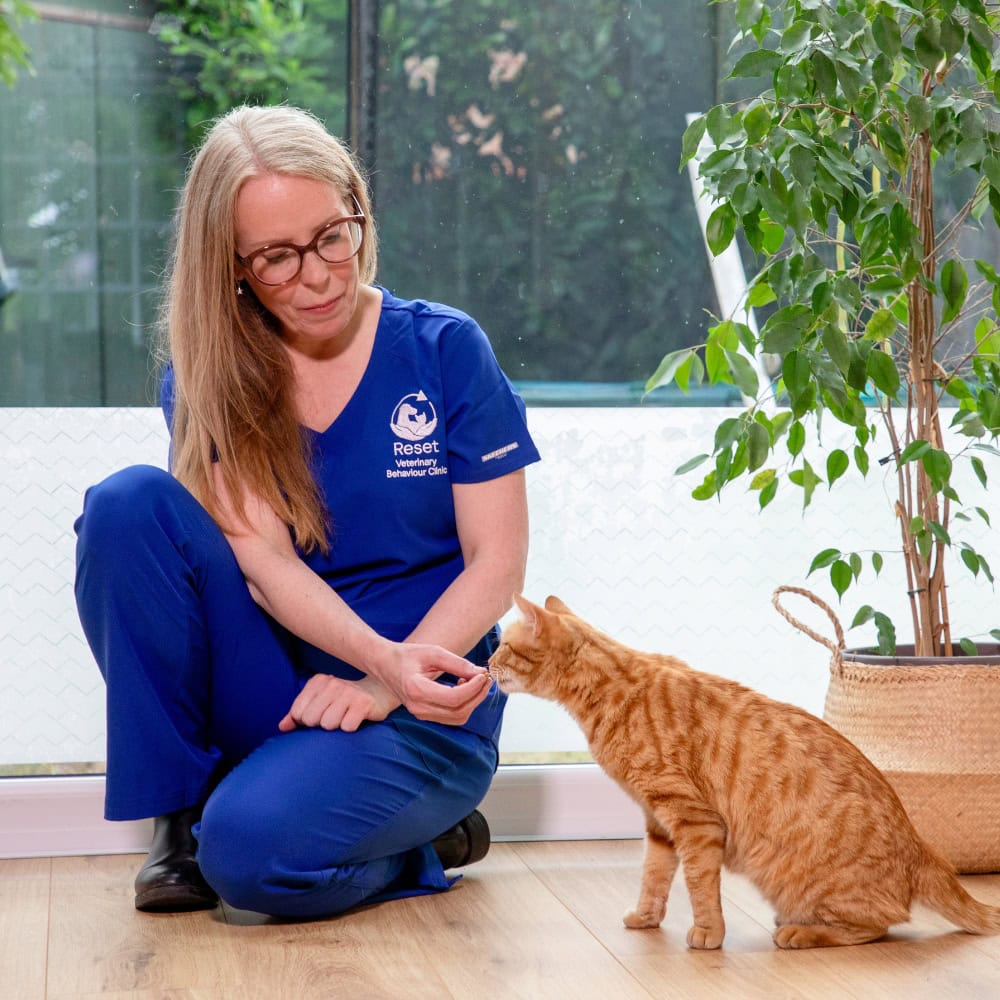
RESET is the foundation of the programme and usually lasts four to eight weeks. A cat who feels threatened, overwhelmed or physically uncomfortable cannot be expected to learn effectively. The first task is to create calm, prevent repeated upsetting experiences and make the home feel safe, predictable and easy to navigate.
For some simpler behavioural change cases, improving the environment, providing predictable routine, privacy and physical comfort during RESET may cause the required improvement. However, for some more complex behavioural challenges moving on to the REWIRE and REBUILD phases will be necessary.
For some simpler behaviour change cases, improving the environment, providing predictable routine, privacy and physical comfort during RESET may cause the required improvement. However, for some more complex behaviour challenges moving on to the REWIRE and REBUILD phases will be necessary.
Rewire - learning new responses in a calm state
Once your cat is calmer, positive learning exercises can begin in a quiet, low-pressure setting. Rewards help your cat make a different choice while still feeling safe, rather than being forced to tolerate something they perceive to be frightening.
Examples of the type of work that may take place during the REWIRE phase include Cooperative Care, where we teach the cat physical handling exercises at home or we create positive associations with visitors to improve a cat's response to them. This changes the neural pathways in the brain and gives the cat new experiences which will lead to new responses, instead of their old, problem behaviours.

Rebuild - taking new skills into everyday life
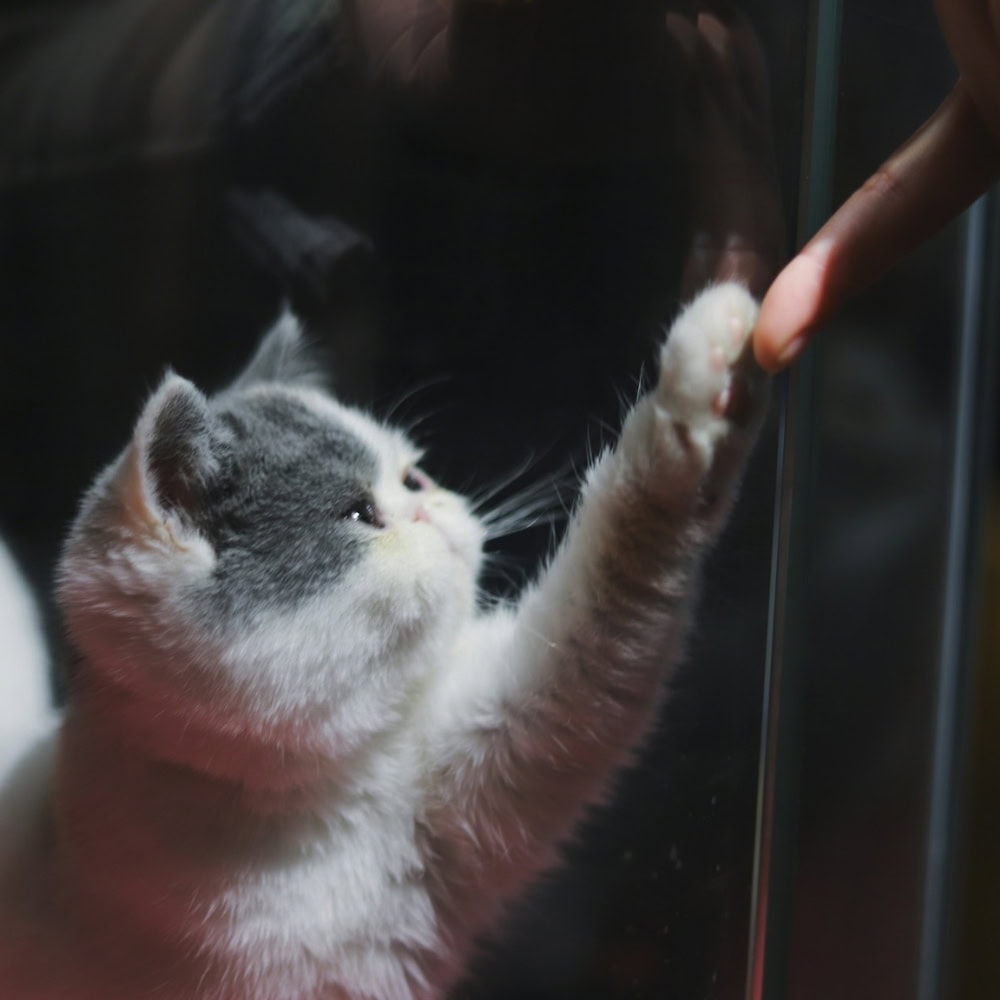
REBUILD takes these new responses into gradually more realistic situations. Each step is adjusted according to your cat's comfort level so that they remain able to cope and learn.
Examples of the type of work that takes place in the REBUILD phase are gentle low-stress exposure to veterinary examination, gradually building up the intensity of this or gradual exposure to new unfamiliar visitors.
Let's help your pet change their behaviour, by changing how they feel
Get in touch to discuss a referral, or find out more about how we can help.